This is a typically deep-bodied Cynolebias species, named for its original collector, Dr. Antenori L. de Carvalho of the Museum Nacional de Rio de Janeiro, Brasil. Information on its discovery and the presumptive type locality were given by Myers in “Annual Fishes,” Aquarium Journal (San Francisco) 23:125-141; specifically, on page 134. Prof. Myers apparently intended to publish a complete description, but never did so. The type specimens were collected from temporary pools and cattle tracks near Russas, a town on the Rio Jaguaribe, Ceara, Brazil. It is now known from at least two other locations in the states of Ceara and Rio Grande del Norte.
The species is currently available in the hobby, although it is not particularly common. Some discussion remains regarding its actual name. Although the original collection and discussion of this species and its biotope came from Myers, Jean H. Huber has described it as C. heloplites.
C. antenori is approximately intermediate between species like C. bellottii and the elongate C. whitei, in shape and general appearance. Males have elongate subterminal dorsal and anal fin rays and a conspicuous color pattern; females lack the fin extensions and are more plainly colored.
This is a reasonably hardy and undemanding species that prefers higher temperatures of 75-80°F, but can be maintained and bred at 70°F. A pair or trio is easily kept in a three gallon aquarium. Adults will accept frozen and live foods; some will take flake foods. Males may be aggressive, and hiding places should be provided for females. Both sexes establish dominance hierarchies and engage in more display behavior than is usual for other Cynolebias species. Fighting among males is frequent.
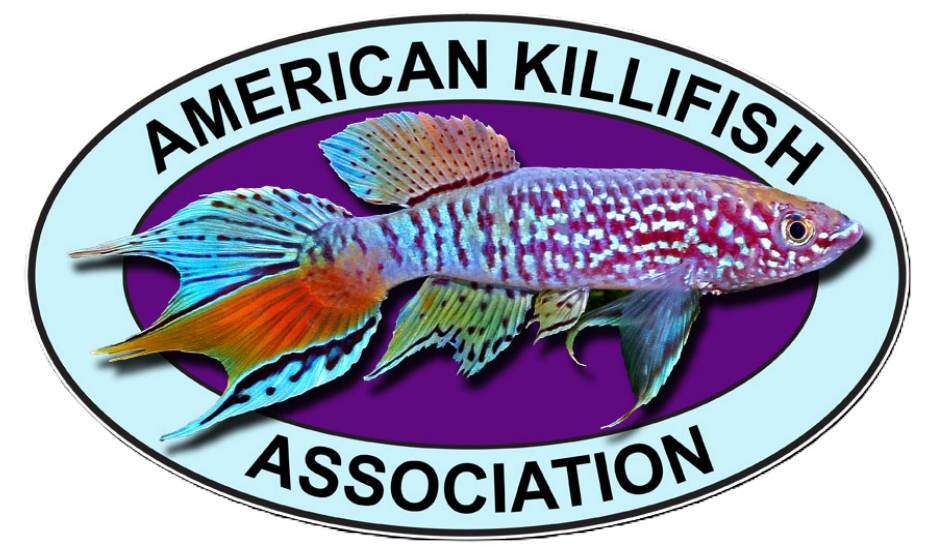
The general body color of the males is light steel gray to gray-blue, dorsum darker with a bronze sheen and the pearl-like metallic spots. The anterior half of the body has faint and indistinct vertical bars. The iris of the eye is golden, crossed by a dark vertical bar. Pectoral fins are colorless to faint blue. The basic ground color of the single fins varies from dark blue-green to yellow-green with rows of white pearl spots. The anal fin has a marginal black band and a submarginal zone of yellow to intense red-orange. The pelvic fins continue the anal fin pattern, with red bases and faint black tips. The intensity of coloration is a function of temperature, age, social position, and sexual arousal.
Females tend to have a light brown body color with 3 to 5 rows of dark vertical “worm-like” markings, posteriorly dorsal darker. One to three large dark ocelli on the mid region of the flank; the number of spots may not be symmetrical. The caudal peduncle has a single black spot. Some specimens have faint brown markings on the base of the anal fin.
The species is not difficult to propagate. C. antenori is a substrate diving species best spawned over peat moss or walnut shells 1.5 inches deep. Isolation and conditioning of females is recommended but not essential. Incubation in dry peat is 5 months minimum, with optimal time of 6-7 months. Fry will take brine shrimp nauplii upon hatching. Sexual dimorphism is apparent within 30-40 days.
References: Weber, Dale. E-mail to the Killifish Mailing List, March 1996, citing Campello, Brasil, G., 1973 and 1974; Langton, R.W., 1972; Myers, G.S., 1952; Nielsen, D., 1975; and Tulipano, J., 1973.
-– G.C.K.A. Newsletter, September 1999